There's a difference. Sustainability as a label is easy. Building something that genuinely replaces a disposable — and keeps doing it for years — is harder. That's the work we're focused on.
We don't think in terms of "eco-friendly" as a category. We think in terms of product lifespan, material origin, and what happens when a customer finishes using something. A product that lasts 650+ cycles and replaces hundreds of single-use dryer sheets doesn't need a sustainability campaign — the math speaks for itself.
No synthetic additives, no chemical coatings, no plastic components. If it can't be made from natural material without losing performance, we don't make it.
Every product we build is designed to replace a disposable. Permanently. Not a better version of a single-use item — an alternative that eliminates it.
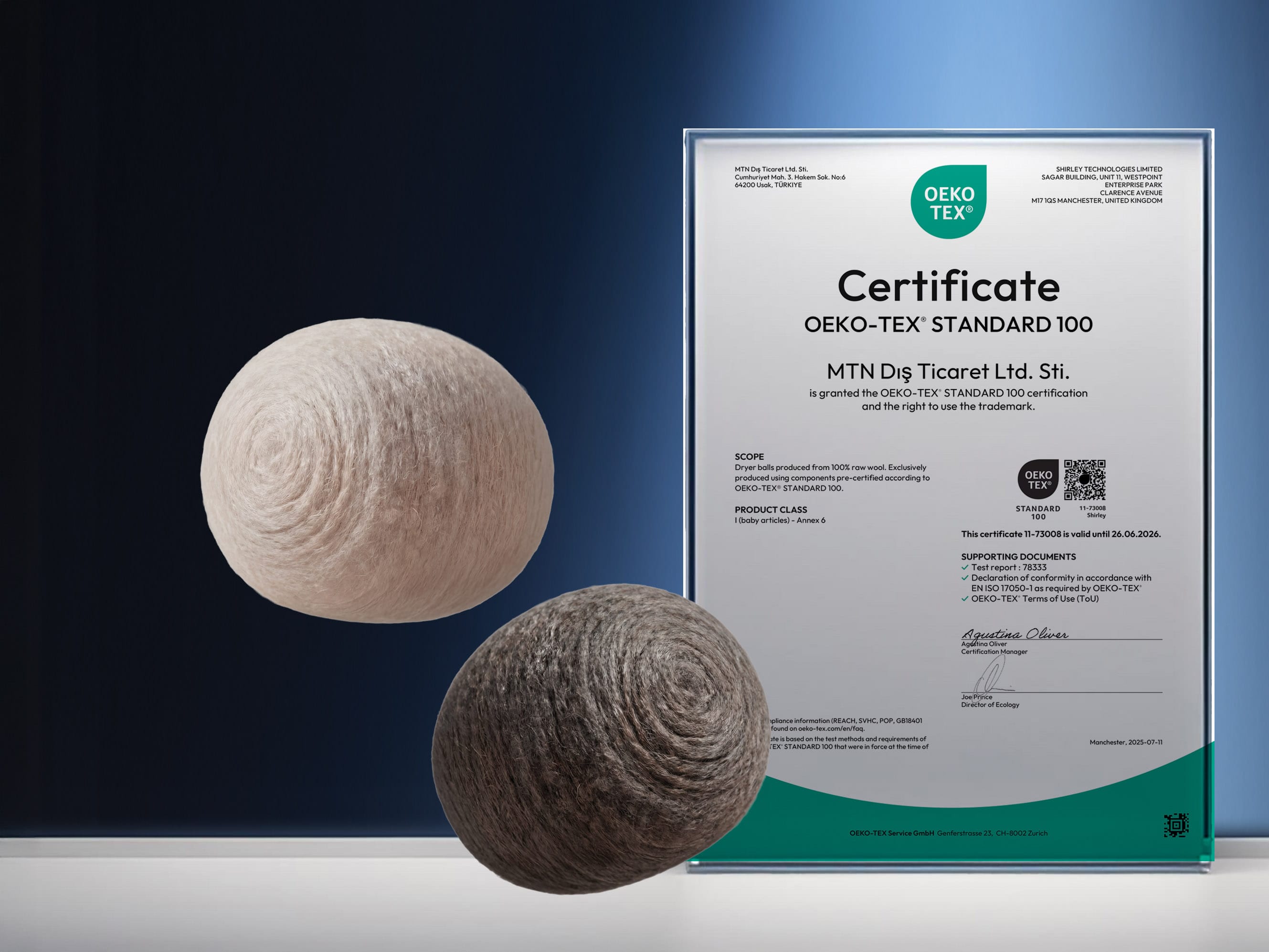
Third-party certification, supply chain transparency, compliance documentation — available on request. We don't make claims we can't back up.

Metsgo® is The Green Tomorrow's first product — and the clearest example of what these principles look like when they're applied to something people use every week.
A lot of brands use sustainability language loosely. We'd rather be specific about what we actually do — and honest about what we don't.
OEKO-TEX® Standard 100 is one of the world's most recognized independent textile certifications — testing for harmful substances at every stage of production. It means the product is safe, not just marketed as safe.
Metsgo® is the first product under The Green Tomorrow. We're not a sustainability brand — we're a product company that holds itself to a specific standard. As we grow, every new product will go through the same filter. That's the commitment. Not a campaign — a practice.